research and practice
Institute of the Sun is a research residency connecting Nordic artists with the contrasting cultural and ecological landscapes of Southern California.
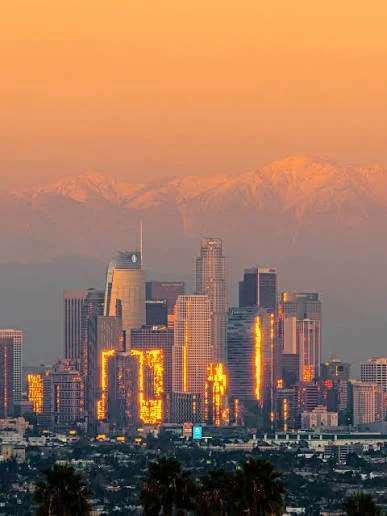
Moving between Los Angeles and more remote communities across the region, the residency uses Southern California as a site for examining how environments shape the ways we live, work and imagine possible futures.
Los Angeles offers one of the world's most complex cultural ecosystems: a vast network of artists, institutions, studios, architecture, entertainment industries, subcultures and communities spread across an immense metropolitan landscape. Beyond the city, this density gives way to radically different conditions. Desert towns, homesteads and remote settlements have attracted successive generations of artists, builders, spiritual seekers and utopian experimenters attempting to construct alternative ways of living.
Institute of the Sun investigates the relationship between artistic practice and the environments in which it takes place.
Our research develops around recurring questions of landscape, architecture, mobility, community and self-organization.
two interconnected poles
The Nordic countries have powerful cultural narratives around collective infrastructure, public culture, design, landscape, welfare and environmental responsibility. Southern California contains almost mirror-image experiments: radical individualism alongside intense community-building; enormous urban infrastructure alongside off-grid living; speculative development alongside environmental fragility; Hollywood image-production alongside vernacular DIY culture. The Institute puts two traditions of experimentation into conversation.
We are interested in spaces that perform more than one function: the home that becomes an exhibition space, the vehicle that becomes a studio, the landscape that becomes an institution, the journey that becomes research.
This interest extends to the communities that form around such spaces.
Throughout Southern California, people have experimented with ways of living at different distances from conventional urban structures, from dense creative networks in Los Angeles to homesteads, intentional communities and self-built environments in the desert.
The Institute encounters these experiments critically rather than nostalgically.
Ideas of freedom and self-sufficiency exist alongside questions of access, ownership, resources, climate and responsibility toward existing communities and landscapes.
Through residencies, workshops, exhibitions, conversations and journeys, artists are invited to consider these contradictions from within their own practices.
Institute of the Sun places Nordic artists within this continuum.
Rather than offering isolation from the city, the residency creates movement between contexts: from studio visits, conversations and cultural networks in Los Angeles to periods of concentrated research and production in remote landscapes and small communities.
The journey itself becomes part of the methodology.
Through encounters with artists, architects, local residents, landscapes and alternative forms of habitation, residents are invited to consider how geography, infrastructure, climate and community influence artistic production—and how art might operate differently when it moves beyond the conventional spaces of the art world.
Institute of the Sun is therefore both residency and field research: a temporary network connecting Nordic artistic practices with Southern California's ongoing experiments in culture, community and ways of living.